Understanding Dropshipping Profit Margins, Earnings Potential, and Real Growth Opportunities
Dropshipping has become one of the most popular online business models, especially for beginners who want to start an eCommerce business with low investment and minimal risk. But the biggest question everyone asks is: how much profit can you actually make in dropshipping? The answer is not fixed—it depends on multiple factors like product selection, marketing strategy, competition, and consistency. However, when done correctly, dropshipping can generate high profit margins and even become a full-time income source.
To understand profit in dropshipping, you first need to know how the model works. In dropshipping, you don’t hold inventory. Instead, when a customer places an order on your store, you purchase the product from a supplier at a lower price and ship it directly to the customer. Your profit is the difference between the selling price and the cost price, including expenses like ads and transaction fees.
Average Dropshipping Profit Margins Explained
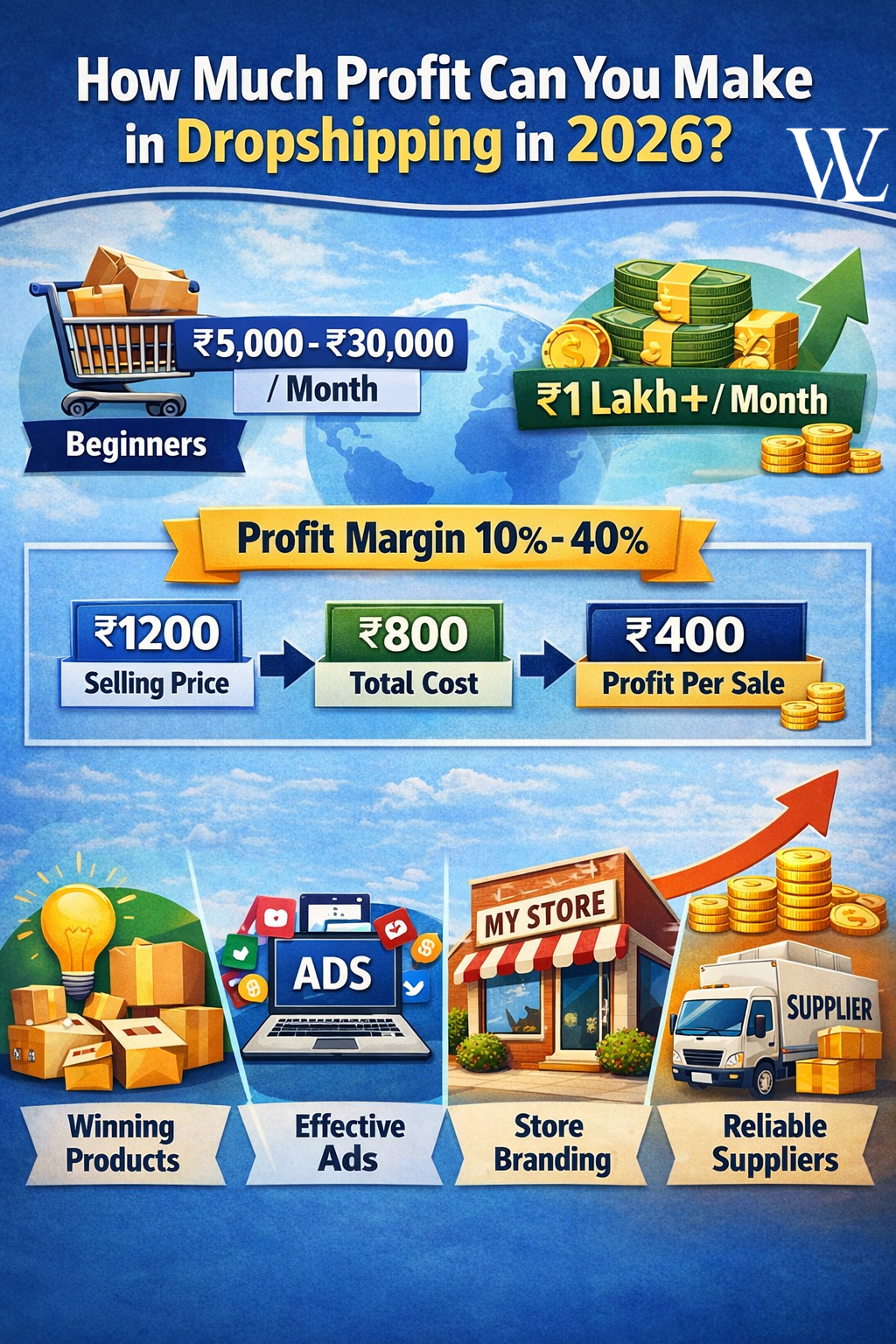
In general, the average dropshipping profit margin ranges between 10% to 40%. Beginners usually start on the lower side, around 10% to 20%, while experienced sellers with strong branding and optimized ads can reach 30% to 40% or more.
For example, if you sell a product for ₹1000 and your total cost (product + ads + fees) is ₹700, your profit is ₹300. That’s a 30% profit margin, which is considered very good in dropshipping.
However, profit margins depend heavily on your niche. High-ticket products (like electronics or furniture) may give larger profits per sale, while low-ticket items (like accessories) require higher sales volume to generate significant income.
Monthly Profit Potential in Dropshipping
The monthly income from dropshipping can vary widely depending on your effort and strategy. Here’s a realistic breakdown:
- Beginner (0–3 months): ₹5,000 to ₹30,000 profit
- Intermediate (3–12 months): ₹30,000 to ₹2,00,000 profit
- Advanced (1+ year): ₹2,00,000 to ₹10,00,000+ profit
Many successful dropshippers scale their stores using paid ads and branding, turning their business into a high-income online store. But it’s important to understand that dropshipping is not a “get rich quick” scheme—it requires testing, learning, and patience.
Key Factors That Affect Dropshipping Profit
1. Product Selection
Choosing the right product is the most important factor. A winning product with high demand and low competition can generate massive profits. Trending and problem-solving products tend to perform better and allow you to charge higher prices.
2. Marketing Strategy
Your marketing determines your sales. Platforms like Facebook Ads, Google Ads, and TikTok Ads can drive traffic, but they also cost money. If your ads are not optimized, your profit margin will shrink. Successful dropshippers focus on high-converting creatives and targeted audiences to maximize ROI.
3. Supplier Cost and Quality
Cheap suppliers may increase your margin, but poor quality can lead to returns and refunds, reducing your overall profit. Finding a balance between cost and quality is crucial for long-term success.
4. Branding and Store Design
A professional-looking store builds trust and allows you to charge premium prices. Strong branding can increase your profit margin significantly compared to generic stores.
5. Order Volume
Higher order volume leads to better profits. Even with smaller margins, consistent sales can generate large monthly income. Scaling is the key to making serious money in dropshipping.
Realistic Example of Dropshipping Profit Calculation
Let’s break it down with a real scenario:
- Selling Price: ₹1500
- Product Cost: ₹500
- Advertising Cost: ₹600
- Miscellaneous Fees: ₹100
Total Cost = ₹1200
Profit per Sale = ₹300
If you make 10 sales per day, your daily profit is ₹3000.
In a month, that becomes ₹90,000 profit, which is a solid income for a small online business.
Can You Make Passive Income with Dropshipping?
Dropshipping can become a semi-passive income source, but it is not fully passive in the beginning. Initially, you need to focus on product research, ad testing, and store optimization. Once your store is stable and profitable, you can automate many processes like order fulfillment and customer support, turning it into a more passive system.
Challenges That Can Reduce Profit
While dropshipping has high potential, there are also challenges that can impact your earnings:
- High competition in popular niches
- Rising advertising costs
- Customer complaints and returns
- Shipping delays from suppliers
To maintain profit, you must continuously improve your strategy and adapt to market trends.
How to Increase Your Dropshipping Profit
To maximize your earnings, focus on these strategies:
- Choose high-demand, low-competition products
- Improve your website for better conversions
- Use upselling and bundling techniques
- Build a strong brand instead of a generic store
- Optimize ads to reduce cost per purchase
By applying these methods, you can significantly increase your profit margins and scale your business faster.
Final Thoughts: Is Dropshipping Profitable in 2026?
Yes, dropshipping is still highly profitable in 2026 if done correctly. While beginners may earn small profits at first, consistent effort and smart strategies can turn it into a highly profitable online business. The key is to focus on long-term growth, not just quick wins.
In conclusion, your dropshipping profit depends on your skills, dedication, and ability to adapt. Whether you make ₹10,000 per month or ₹10 lakh per month, the opportunity is real. With the right mindset and execution, dropshipping can become a powerful way to achieve financial freedom and build a sustainable online income.